
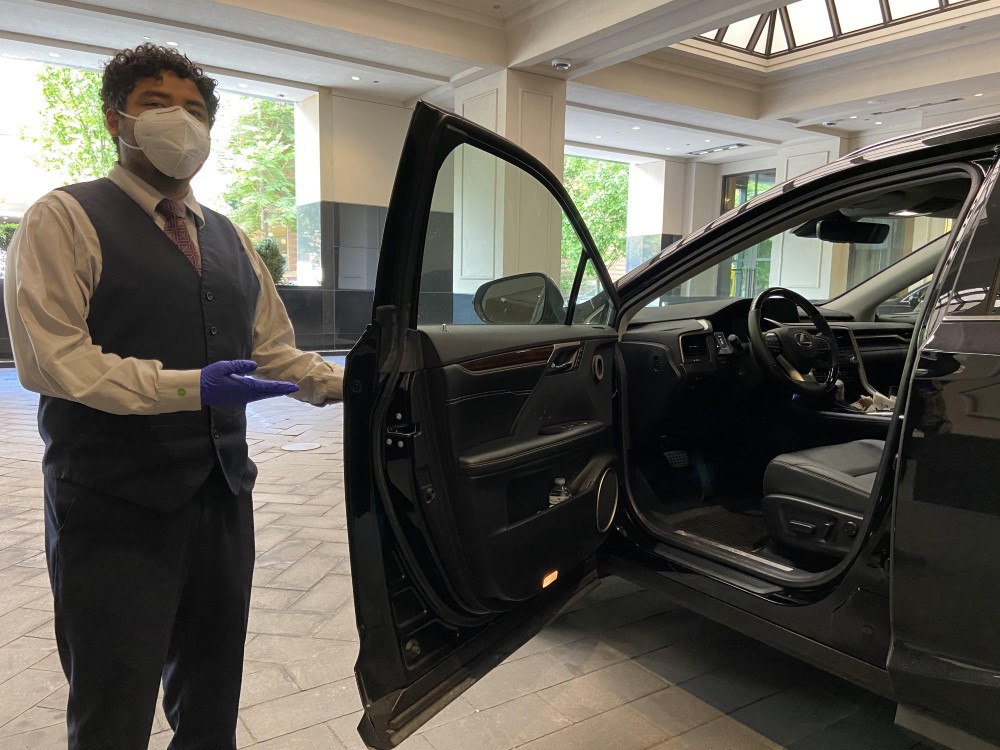


For hospital operations leaders, parking is rarely just about cars. It’s the first and last touchpoint of the patient experience, a measurable driver of HCAHPS scores, and a line item that can quietly drain operational budgets when mismanaged. As hospital systems expand and patient volumes grow, hospital parking management becomes a strategic decision, not an administrative one.
Most hospitals run parking one of two ways: in-house, with their own staff managing operations, or outsourced, with a specialized third-party provider taking the reins. Both can work. But they produce very different outcomes when measured against cost, scalability, technology, and patient experience. What are the major differences between the two approaches, and which model fits your operational strategy?
The in-house model means the facility owns every part of the parking operation. The hospital recruits attendants, supervisors, and lot managers, runs scheduling and payroll through internal HR, and owns the technology stack, equipment maintenance, workers’ comp exposure, and day-to-day oversight.
The appeal is control. Hospital leadership has direct visibility into staffing decisions and can integrate parking employees into broader facility teams. The short-term cost picture can also look attractive: with no vendor margin to pay, the line item appears lower than an outsourced contract.
The long-term picture is where the math shifts. The parking industry averages over 80% annual employee turnover, meaning constant recruitment cycles, training costs, and service inconsistency. In-house operations also absorb every workers’ comp claim, every liability incident, and every administrative hour spent on a department that sits well outside the hospital’s clinical mission.
Outsourcing hospital parking means partnering with a specialized third-party provider for dedicated hospital parking management and valet services. The provider handles recruitment, training, scheduling, compliance, equipment, and reporting. Your team gets the outcomes without the operational burden.
The cost structure differs from in-house in important ways. Outsourcing hospital parking introduces predictable contracts, performance-based service levels, and shared accountability for results. At Advocate Health, FC Parking reduced parking operations costs by 27% across 12 hospitals while improving the patient arrival experience. That kind of measurable outcome is difficult to replicate when parking is one of dozens of internal departments competing for attention.
Flexible staffing models are the foundation of outsourced healthcare parking solutions. Adaptive scheduling adjusts attendant levels hour by hour based on actual patient volume, avoiding understaffing during peak windows and waste during quiet periods. Performance-based contracts tie compensation to measurable service outcomes, so cost and quality move together. Risk shifts too: workers’ comp claims, HR disputes, and liability move from the hospital’s books to the provider’s. Parking service scalability becomes a phone call, not a hiring cycle, whether the facility is opening a new tower, absorbing an emergency surge, or expanding shuttle services across a multi-site campus.
Outsourced providers bring a technology stack that hospitals would struggle to build internally. Real-time occupancy tracking shows how every lot is performing throughout the day. Cloud-based reporting dashboards give administrators visibility into wait times, throughput, and satisfaction trends. Parking data analytics turn daily operations into a feedback loop that gets smarter over time. Integration is where strategic value compounds: modern parking platforms connect to hospital ERP, security infrastructure, and financial reporting tools, so parking data flows into the dashboards leadership already uses. AI-driven forecasting predicts demand patterns and allows staffing decisions before bottlenecks form.
The choice between the two models comes down to where your facility wants to spend its operational energy. In-house gives you direct control at the cost of ongoing HR, training, and technology burden. Outsourced delivers measurable outcomes, predictable costs, and a partner whose only job is to optimize your operation. Aligning that decision with your hospital’s broader IT and operational strategy is what separates parking as overhead from parking as a competitive advantage.
Contact the parking solutions specialists at FC Parking to explore how to optimize your hospital parking operations for cost, efficiency, and patient satisfaction.
Is outsourcing hospital parking more cost-effective than in-house management?
In most cases, yes. While in-house can look cheaper on paper, the full picture includes HR overhead, workers’ comp, turnover-driven recruitment, and technology costs. Outsourced providers deliver predictable contracts with documented cost reductions averaging 14% across client engagements.
Can outsourced parking providers integrate with hospital IT systems?
Yes. Established providers bring cloud-based platforms that connect with hospital ERP, security, and financial reporting systems, giving IT and operations teams a single source of truth for parking data.
How does parking management affect patient satisfaction scores?
Parking is the first and last impression patients have of a facility, and it directly influences HCAHPS scores tied to access and overall experience. Well-managed parking reduces missed appointments and contributes meaningfully to satisfaction ratings.
What risks should hospitals consider when outsourcing parking services?
The main risks are choosing a provider without healthcare experience or one with high turnover. Evaluate HIPAA training, Joint Commission alignment, retention rates, and case studies from similar facilities before signing a contract.